
A Complete Guide to How It Works and the Different Types
Sushi robots are transforming the way sushi is prepared in restaurants, supermarkets, and catering kitchens. Instead of relying on hours of manual work, these machines automate key parts of sushi production, ensuring speed, consistency and hygiene without compromising quality.
At Robots 4 Sushi, we provide a complete range of professional sushi automation equipment that supports every step of sushi preparation, from rice washing to fish slicing.
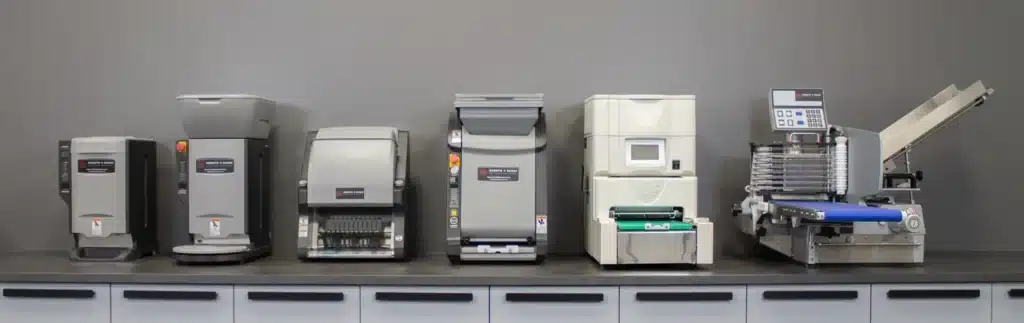
What Is a Sushi Robot?
A sushi robot is an automated device that performs one or more specific steps in the sushi-making process. While traditional sushi chefs manually cook rice, form nigiri or roll maki, sushi robots perform these tasks precisely and consistently, allowing businesses to produce large volumes of high-quality sushi efficiently.
Rather than a single device, the term sushi robot includes several categories of machines that together create a fully automated workflow.
The Main Types of Sushi Robots
1. Rice Cookers
Professional rice cookers automatically cook large volumes of sushi rice with perfect temperature and moisture balance. They maintain consistent quality throughout the day, ensuring every batch has the right texture for nigiri, maki or bowls.
Cooking time varies depending on model and capacity but typically ranges from 30 to 45 minutes per batch.
These industrial-grade cookers are ideal for restaurants and supermarkets that require high capacity and reliability.
2. Rice Washers
Before rice can be cooked, it must be thoroughly washed to remove starch and achieve the proper stickiness. Rice washers handle this step automatically, ensuring every grain is clean and evenly rinsed.
A typical rice washer completes the process in around 8 minutes for 15 kg of rice, ensuring perfect results every time.
Automatic washing reduces preparation time, saves water, and ensures consistency from batch to batch, a feat that’s difficult to achieve manually.
3. Rice Mixers
Once the rice is cooked, it needs to be mixed with sushi vinegar to achieve the perfect balance of taste and texture. Rice mixers automate this delicate process, evenly distributing vinegar while maintaining the ideal temperature.
A typical rice mixer takes around 9 minutes for 15 kg of rice, producing perfectly seasoned sushi rice that’s ready for use.
The result is evenly mixed, glossy rice, ideal for nigiri, maki or rice bowls.
4. Rice Dispensers
Portioning rice accurately is critical for both cost control and quality. Rice dispensers automatically measure and release the exact amount of rice needed for each portion, for example, when preparing bento boxes or rice bowls.
This ensures uniform portion sizes, minimizes waste, and improves kitchen efficiency.
5. Nigiri Sushi Robots
Nigiri sushi robots form perfectly shaped rice balls with precise pressure and size, replicating the work of a skilled sushi chef. Each rice ball is consistent in shape and density, making it easy to add toppings such as fish, shrimp or tofu.
A typical nigiri robot can produce up to 4,000 pieces of nigiri per hour, ensuring both speed and precision in high-demand kitchens.
These machines are essential for businesses producing large quantities of nigiri while maintaining presentation and taste standards.
6. Maki robots
Maki robots automate the rolling process, spreading rice evenly onto seaweed sheets, adding fillings and rolling them into perfect cylinders.
They ensure every roll has uniform thickness and filling distribution, reducing preparation time and improving consistency across all servings.
A typical maki robot can produce up to 1,500 rice sheets or maki rolls per hour, enabling efficient and consistent output.
Maki robots are available in different configurations, including sheet-type and belt-type systems, to suit various production environments.
7. Maki Cutters
Once the rolls are made, maki cutters slice them into even pieces automatically. This step saves significant time and eliminates the inconsistency that comes with manual cutting.
A professional maki cutter can produce up to 3,000 maki pieces per hour, with clean and precise cuts that enhance presentation and consistency.
Clean cuts also reduce product loss and improve overall efficiency.
8. Sushi Fish Slicers
Sushi fish slicers are designed for fast and precise cutting of salmon and other fish used in sushi and sashimi. They produce uniform slices in seconds, a process that can be difficult and time-consuming to perform by hand.
A professional nigiri or fish slicer can deliver up to 18,000 perfectly cut salmon slices per hour, combining accuracy with exceptional speed.
These machines improve speed, reduce waste and ensure hygienic handling, especially in high-volume environments.
9. Digital Kitchen / Work Robots
The digital kitchen, also referred to as a work robot, represents the next generation of sushi automation. Smart robots combine multiple functions including preparation, cooking and monitoring, into one connected system.
AI-assisted controls and data-driven adjustments allow kitchens to maintain consistent quality while optimizing workflow and energy use.
Depending on configuration, these systems can complete full sushi preparation cycles in minutes instead of hours, dramatically improving kitchen productivity.
Why Use Sushi Robots?
Sushi robots help businesses produce high-quality sushi efficiently and profitably. The main advantages include:
- Consistent quality and presentation across all sushi types
- Faster production and reduced labor dependency
- Improved hygiene and food safety standards
- Lower ingredient waste and better portion control
- Scalable automation for businesses of any size
By integrating these machines, restaurants and food retailers can maintain traditional taste and craftsmanship while meeting modern production demands.
Want to See Sushi Robots in Action?
If you’d like to learn more about how sushi robots work or see how they can improve efficiency and quality in your kitchen, contact Robots 4 Sushi for a free demo or consultation.
Our team will help you find the right solution for your restaurant, supermarket or catering operation.